

GUIDE • EVENTS & FESTIVALS
Event Restroom Planning Checklist
A practical checklist for festivals, parties, and public gatherings in Richmond.
Event restroom planning Richmond hosts rely on comes down to a handful of decisions that most people only think about once, right before it matters. Getting these right the first time avoids a scramble on event day.
Five Things to Nail Down Before You Book
- Realistic guest count — not the invite list, the number actually expected to show and use facilities.
- Event length — a 3-hour afternoon event and an 8-hour festival need different unit counts even at the same guest total.
- Whether food is involved — food vendor events need real handwashing access, not just restrooms.
- Accessibility needs — public events should default to including at least one real ADA-compliant unit per restroom cluster.
- Site access and permits — public right-of-way or city park placement may require a temporary use permit; private property generally does not.
Multi-Day Festivals Need a Servicing Plan, Not Just a Delivery
A single delivery at the start of a weekend festival is not enough for high-traffic events. Plan for daily servicing across multi-day gatherings, and distribute units across the venue rather than clustering them in one spot, which just creates lines at that single location while the rest of the grounds go uncovered.
Richmond’s festival calendar, especially around Shockoe Bottom and Scott’s Addition, books up event inventory fast during spring and fall. Reach out earlier than you think you need to for any event during a known busy stretch. For general background, see this overview of event management.
Food Vendors Have Requirements Beyond General Guest Restrooms
Any event with food vendors present should plan handwashing access as a separate line item from general guest restroom count. Local health guidance generally expects vendors handling food to have accessible handwashing nearby, with real soap and running water, not a bottle of hand sanitizer at the vendor table. Positioning at least one handwashing station within easy reach of the food vendor area, distinct from the general restroom cluster serving the broader crowd, is worth planning for specifically rather than assuming general facilities cover it. Begin event restroom planning as soon as you set a date.
This is a real public health basic, not a nice-to-have, and event organizers who plan for it upfront avoid the scramble of a vendor or health inspector flagging the gap once the event is already underway.
Timing Delivery Around Setup and Teardown
Most events need units delivered the day before or early the morning of, coordinated with your broader setup schedule rather than arriving randomly among other vendor deliveries. For events with a tight setup window shared by multiple vendors, tell us your load-in schedule so we can slot delivery timing to avoid creating a bottleneck at the site entrance alongside catering, staging, and other equipment arriving at the same time.
Teardown timing matters just as much. Some events need units to stay through the following morning rather than immediate pickup once the crowd clears, particularly for late-running festivals or events with an early-morning vendor cleanup crew still working the site. We plan pickup flexibility as a normal part of event bookings rather than a special exception.
Whether you are organizing a neighborhood block party or a multi-day festival drawing thousands, the same core planning principles apply, just at different scale. Get the guest count and duration right, distribute facilities sensibly across the venue, plan food-vendor handwashing separately from general restrooms, and confirm permit responsibility early rather than as a last-minute scramble. Good event restroom planning includes a handwashing station when food is served.
None of this needs to be complicated, and we would rather walk through it with you on a call than leave you working from a checklist alone.
Reach out with your event details and we will help you plan it properly from the start.
Call with your guest count, dates, and venue, and we will build an accurate quote rather than a generic estimate.
Sizing Facilities for Your Actual Attendance Curve
Events rarely have flat attendance. A festival might see steady traffic all afternoon, while a concert or ceremony creates concentrated rushes right before and after the main event, when everyone tries to use facilities in the same short window. Planning for average attendance alone underestimates what you actually need during those peak moments, which is exactly when long lines become visible and memorable to guests. Building in some buffer capacity above the bare minimum matters for events with predictable rush periods.
Multi-day festivals compound this further, since daily attendance can vary significantly between a Friday evening and a Saturday afternoon. If your event has published or expected attendance figures per day, share them with us so we can plan unit count and servicing frequency around the actual pattern rather than a single flat estimate applied across every day. Keep your event restroom planning notes with the vendor contacts.
Distributing Units Across the Venue the Right Way
Clustering every unit in one location, even if the total count is technically adequate, creates a functional bottleneck at large events. Spreading units across multiple zones of the venue, near main stages, food vendor areas, and general gathering spots, distributes traffic naturally and keeps any single line from growing unmanageable. This matters more as venue footprint grows, and it is a real planning consideration for festivals spread across parks or open fields rather than a single contained space.
Share your venue layout or site map when you book, even a rough sketch, so we can recommend distribution rather than defaulting to a single cluster near the main entrance.
Event Restroom Planning: Counts, Placement, and Timing
Event restroom planning starts with a headcount and the length of the event. A short daytime gathering needs about one unit for every 50 guests; long hours, alcohol, or a single start time push that number up.
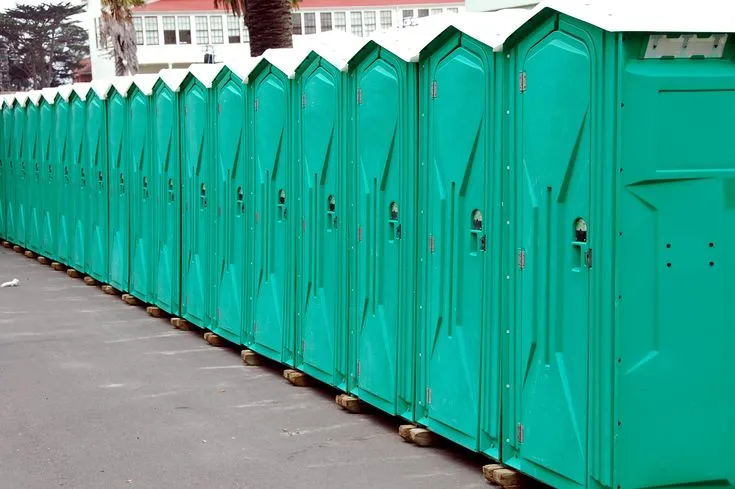
Placement is the second half of event restroom planning. Put units on level ground, within sight of the activity but away from food, and light the path if guests will stay after dark. Our guide on how many porta potties you need gives the usual counts by event type.
Last, confirm access. Tell your rental company where the truck can stop, whether a gate needs opening, and who will meet the driver. Clear answers there prevent most delivery-day problems.
Permits, Public Land, and Who Handles What
Events on private property generally do not require a placement permit for restroom equipment. Events on public land, city streets, or in a public park typically do, and Richmond’s specific permitting process for public events usually covers the full event footprint, not restroom placement in isolation. The event organizer is generally responsible for securing this permit as part of the overall event approval process, not the rental company. If you are unsure whether your specific venue falls into the public or private category, tell us the exact location and we can at least flag whether it looks like something that will need permitting attention.
For events involving street closures, coordinate delivery timing with us well ahead of the closure window opening, since navigating barricades on the actual event day is far more difficult than confirming placement before the closure takes effect.

Richmond’s trusted source for clean, reliable Porta Potty Rentals Richmond VA — serving job sites, weddings, and outdoor events across Richmond, Henrico, and Chesterfield with same-day delivery and honest pricing.
Quick Links
Our Services
Get In Touch
6550 Iron Bridge Rd
Richmond, VA 23234
info@portapottyrentalrichmond.net
Open 24/7 · Same-week delivery
Copyright © 2026 Porta Potty Rental Richmond. All rights reserved.
More Places We Serve
More Guides and Event Types